

RUCKERT-LIEDER / WESENDONCK-LIEDER / PRELUDE / MORT D'ISOLDE (2007)
Felicity Lott / QUATUOR Schumann
Componist: Mahler / Wagner
Genre: Vocaal / Koren
CD | 1 disc(s) | Nieuw
Verwachte levertijd (in NL): 1 tot 3 werkdagen
ACTIE: 10% korting bij elke bestelling van min. 3 artikelen

Extra info
| Label: | Aeon |
|---|---|
| Barcode: | 3760058368589 |
Beschrijving
Dame Felicity Lott (soprano) & Quatuor Schumann
Als vervolgd revolutionair moest Richard Wagner in 1849 Dresden ontvluchten en, na een tussenstop in Parijs, zocht hij tenslotte zijn toevlucht in Zürich. Hier ontmoette hij in 1852 de fabriekseigenaars Otto en Mathilde Wesendonck, met wie hij spoedig goed bevriend raakte. Wagner en Mathilde Wesendonck ontwikkelden al snel een intieme relatie die artistiek uiterst vruchtbaar was voor de componist: Het muziekdrama Tristan und Isolde werd geschreven onder invloed van hun relatie, en Wagner schreef zijn enige liederencyclus, de Wesendonck Lieder, gebaseerd op gedichten van Mathilde Wesendonck, waarvan hij er zelf twee beschreef als studies voor Tristan und Isolde. Oorspronkelijk geschreven als pianoliederen, orkestreerde Wagner zelf een van de liederen, en zijn leerling Felix Mottl maakte een orkestratie van de cyclus, die hier te horen is in een arrangement met pianokwartet.
Mahler:
Rückert-Lieder
Blicke mir nicht in die Lieder! (Rückert-Lieder)
Ich atmet' einen linden Duft (Rückert-Lieder)
Ich bin der Welt abhanden gekommen (Rückert-Lieder)
Liebst Du um Schönheit (Rückert-Lieder)
Um Mitternacht (Rückert-Lieder)
Wagner:
Tristan und Isolde: Prelude & Liebestod
5 Wesendonck-Lieder
"What a revelation this disc actually turns out to be. Lott's voice brings wonderful subtlety and intensity to the music, Isolde's death scene in particular."
Classic FM Magazine
"The Schumann Quartet's pianist, Christian Favre, has made these clear, practical transcriptions (rather than arrangements, the bookletnote stresses) inspired by Chausson's Chansonperpetuelle, and with a view to adding to the chamber music literature from the Romantic world of song. So expect a scaled-down report on the works concerned rather than Schoenberg's interventionist way with Johann Strauss or Brahms, or the risk-taking panache of Liszt's operatic adaptations. Not the least virtue of the exercise is that we get Dame Felicity Lott in repertoire she might otherwise not have attempted. Her performance of the Liebestod – or 'Verklärung' as we should call it – is such an object lesson in engagement with the text, sensuality and controlled power that one might imagine the late Carlos Kleiber (whose favourite Marschallin she was) contemplating a further recording of the opera with her. The Wesendoncks have a similar sensual (and lean) intelligence, devoid of the stuffy Victorian abstractions that Mathilde's dreadful poetry can often produce in performance. And, if this is not the ideal-est voice for the darker corners of the Rückert-Lieder, you'll need to hear what Lott makes of the poems. The Tristan Prelude is fine too; it's just that it doesn't have a voice part. Good recordings, and 100 per cent worth it for the singing."
Gramophone - Classical Music Guide 2010
Recent bekeken
RUCKERT-LIEDER / WESENDONCK-LIEDER / PRELUDE / MORT D'ISOLDE (2007)
Felicity Lott / QUATUOR Schumann
Mahler / Wagner
CD |
Nieuw
Vocaal / Koren
€ 19,95
Details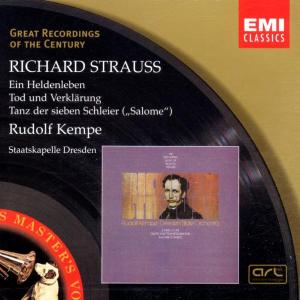
Ein Heldenleben/Tod und Verklarung / TANZ DER SIEBEN SCHLEIER
Rudolf Kempe / Staatskapelle Dresden
Richard Strauss
CD |
Tweedehands: goed
Classical / Various
€ 4,95
Details


Emil Mlynarski: Violin Concertos 1 2 / Aleksander Zarzycki: Mazurka
Eugene Ugorski (violin) / BBC Scottish Symphony Orchestra / Michal Dworzynski
Emil Mlynarski / Aleksander Zarzycki
CD |
Nieuw
Solo / Concerten
€ 11,95
Details
El Sonido Nuevo (2010) [Rock, Blues]
Ian Moore and the Lossy Coils
CD |
Nieuw
Jazz / Blues
€ 10,95
Details
